
November 2, 2012

October 24, 2012
Wednesday wisdom: midwifery in the US
Did you know that medicine aimed to eliminate midwives in the early 20th century to gain control of the "market" of birthing?! Midwives we blamed for the high infant and materna rates in the US, called illiterate and unclean. However, research shows that the poor births rates increased directly with the increase in hospital and physician births! Midwives have a purpose and we need to be educated about their skill level, scope of practice, and benefits:
1. Midwives provide competent overall well woman care: gynecology, pregnancy, birth, postpartum, family planning
2. Nurse-midwives can usually practice in hospital, birth center, homebirth settings and have prescription in some states. Licensed and certifed professional midwives cannot do hospital births, prescribe, or give medical invertention.
3. Provide decrease in mortality rates, need for intervention, increase breastfeeding and postpartum benefits.
October 22, 2012
Monday Mood
I have been away for quite some time. Much to my amazement actually. Time passes so quickly, that we often don't realize how much we have missed until we look back. I started running a Black womens birth circle at the beginning of this year in hopes to educate sisters about our bodies, options, and infant mortality in our community. As I received a text the other day about another baby born into our circle, I had an epiphany. We have been blessed by three amazing souls since the circle began, but I realized they all ended with a cesarean section. While each one had a different "plan" or vision the result was the same.
With that being said, what am I doing wrong? Is the birth circle addressing the needs of the women?! Teaching is fundamental. Some things are just circumstance in birth, but 3:3 is no bueno for me. I have to start before pregnancy with the basics perhaps. That is part of my journey to understand and figure out. What are your suggestions for needed education to make the change?
With that being said, what am I doing wrong? Is the birth circle addressing the needs of the women?! Teaching is fundamental. Some things are just circumstance in birth, but 3:3 is no bueno for me. I have to start before pregnancy with the basics perhaps. That is part of my journey to understand and figure out. What are your suggestions for needed education to make the change?
July 9, 2012
Moody Monday: wisdom circle
Baby showers are the modern day form of a blessingway in my opinion, with a more capitalistic twist. For centuries, various cultures have always created a circle of support and education around pregnant women from elder women in the family/community. Its a necessity to have this circle as a guide. If you sit at the feet of the elders you will gain much wisdom on motherhood: how to comfort a sick baby, teething, breastfeeding, postpartum healing traditions and more. Start creating traditions around what has already been done.
June 24, 2012
Moody Monday: Gratitude List
In lite of the current plight of the US economy, the world seems to be in a constant funk. Every day is a challenge. We often wonder, what will happen next? Once we are in this negative space, its difficult to see our lives in other ways.
If we want CHANGE, we must be that change in words, actions, and emotion. To start the process, I encourage you to create your "gratitude list" today: a list of all your blessings. Its an unspoken way of saying thank you to the universe, but also helps see life at its fullest. Life is about LIVING, but we can't live fully when we are choking our spiritual/emotional joy.
June 10, 2012
Moody Monday: Vote
I'm currently taking statistics and its got my mind racing about all the research possibilities available. I'd like to take a poll:
For those that have had a hospital birth, how many had not one intervention (pitocin, epidural, foceps, vacuum, cytotec, etc.). If you did please specify what you had.
Wednesday wisdom: Cypher
Many people are clueless about the ever present cycle of intervention, but I'm here to tell you - it exists. While most women have their baby at the hospital, some don't educate themselves about intervention. Possibly because they trust that the staff decisions will offer complete safety or because there isn't a lot of research to negate it? Out is there? No matter what your birth choices are, knowledge is always power in maintaining your autonomy. I encourage you to read up!
June 8, 2012
Feasting Friday: Morris Code?
Americas food supply seems to be getting more and more mysterious and tainted these days. The FDA has a strong hold on just about every thing and the consumer is the last one to know how the food is produced even though we are the ones purchasing it. So, start taking charge of what is put on your families table by Reading Produce Codes.


June 4, 2012
Moody Monday: Investment
With the busy lifestyle Americans live, women are expected to maintain a household and career. Too often, women of childbearing age are forced to decide between the two. Our society makes it damn near impossible to do both 100%: many work just to pay someone else to care for and raise their children. Whatever choice speaks to your heart remember that time flies, babies grow up fast and you only get one "first" for it all. Pour your heart into raising strong, intelligent, empowered children of the future.
June 1, 2012
Feasting Friday: You Can't Eat Just One
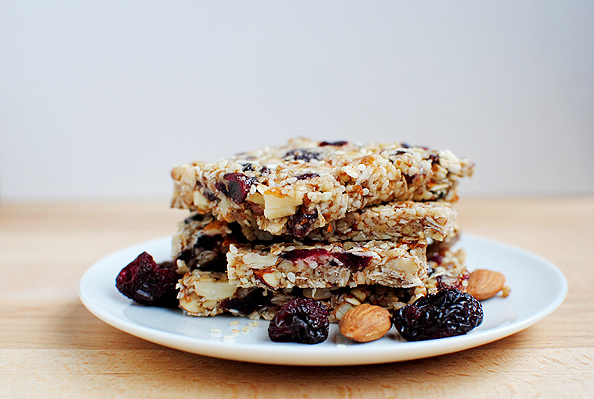
I've made these TWICE and they are scrumpdiddilyupmtious :-) 1st time I followed the exact instructions using currants instead of cherries and flax seeds in place of sesame seeds. The 2nd time I used the cherries because they give some tang, pistachio nuts, less honey, added agave nectar, and tahini. Basically use what you have and make it taste good.
Healthy Chewy No-Bake Granola Bars

Healthy Chewy No-Bake Granola Bars
May 30, 2012
Wednesday Wisdom: Breast is Best per a Friends Request
A friend of mine who happens to be a strong breastfeeding advocate and lactation consultant blogged:
Every Mother, Every Child: Breastfeeding Not Breast Cancer: The other day a distant cousin of mine sent me an e-mail on Facebook talking about a fundraiser for a Breast Cancer foundation. It was some...
Every Mother, Every Child: Breastfeeding Not Breast Cancer: The other day a distant cousin of mine sent me an e-mail on Facebook talking about a fundraiser for a Breast Cancer foundation. It was some...
May 28, 2012
Moody Monday: No Gold Metal
To all the amazing women out there that do it all: wake up early in the morning to get the children clothed, fed, and off to school..go to work for 8+ hrs at a job that sucks them dry, rush home to help with homework, while cooking dinner, making lunches, signing notes, taking children to various activites, in and out of carseats, nursing ouwees, nursing a baby, baths, combing hair, bed time stories, cleaning the house, washing laundry, etc. to then complain to someone at the end of the day how exhausted you are.
If this sounds like your typical day...STOP and think what's missing from this list?
If you realize you didn't take one moment for yourself just to breathe, you're right on point. I am this woman. But it dawned on me that at the end of the day there is no academy award for doing it all alone to exhaustion. We must learn to say "no", ask for help DIRECTLY, and rejuvenate our spirits. With a cup half empty what more can you give to others? It can start with little things:
1. Pray when you first get out of bed them breathe fresh air for 5min
2. Take a bath at night at least once a week
3. Have your children massage your feet (maybe a $1 entices them lol)
4. Take a evening walk
5. Journal
6. Tea in the back yard with some music
7. Dance at home to your favorite music
May 23, 2012
Wednesday wisdom: They are what you think
Did you know that babies feel all of your emotions in the womb and as infants? Stress, anger, sadness, joy, everything affects your baby. Be very aware of your surroundings, thoughts, and desires to nurture healthy spirit in your punkin ;)
May 21, 2012
Moody Monday: 143
There is nothing more healing than the human touch. Its even more necessary and intimate during pregnancy and birth. The physical, emotional, and chemical reaction that happens during love making is the same energy reinacted during the childbirth phase. But we live in an era that thrives on technical energy much deeper. How do we bring human touch and relationships back? Put down the phones, ipods, laptops, and game systems for just 10 minutes to start. Instead talk to your partner, rub each others feet, go for an evening stroll, go to a mountain top or beach and just listen. Its as simple as that! Little things go a long way to creating new rituals. Touch someone today and have a conversation to renew your spirit.
May 18, 2012
Feasting Friday: Juice does a body Good
I love juicing, especially first thing in the morning to help wake you up. Here is one of my favs to make:
2 beets
1 orange
4-5 smaller carrots
Juice in your juicer :-)
You can add or take away more to your taste. This will give you a huge boost of vitamin C, iron, beta carotene, and calcium: all the essentials needed for pregnancy and postpartum.
2 beets
1 orange
4-5 smaller carrots
Juice in your juicer :-)
You can add or take away more to your taste. This will give you a huge boost of vitamin C, iron, beta carotene, and calcium: all the essentials needed for pregnancy and postpartum.
May 14, 2012
Moody monday: The Queen
It was Mother's Day yesterday!! With 3 daughters, the known phrase in my house is "I'm a princess and mommies the queen". My 5 year old even made me a crown in class that said that :) Yesterday started out a bit bleek for me, but I made sure I didn't lift a FINGER to get my r&r which is challenging and almost impossible for me. I had a magnificent day with my family doing nothing: perfect honor.
How did you get your royal treatment?

Feasting Friday: Kids choice
My 3yo and I made these amazingly yummy snack that just so happens to be healthy for you ad packed with protein and fiber! You can find the recipe here:
We used agave nectar for sweetner, added gogi berries, no coconut. I think I'm gonna scale back on the peanut butter and sweetner a bit next time, but the varieties are endless!

May 11, 2012
Feasting friday: Hydration
Summer time is approaching soon and for us desert folks, its already here. To keep your body hydrated don't reach for those drinks packed with sugar and food coloring. Instead make this natural electrolyte drink which is great for pregnant, laboring and postpartum women too.
Make a big pot of red raspberry tea from loose herbs or even premade bags. Add raw honey, fresh lemon juice, and 1 tsp of natura sea salt of your choice.
Red raspberry strengthens your uterine muscles.
Raw honey provides tons of vitamins and minerals but it must be raw not the clear processed stuff
May 10, 2012
Wednesday Wisdom: WHO Recommends Midwives
I always talk about how phenomenal midwives are and its not to ignore the great work physicians do by any means. Doctors also have a necessary place with regard to pregnancy and birth. The world needs more midwives for the health and safety of our women and children, and even the World Health Organization agrees. Check out the 10 Facts on Midwifery
May 7, 2012
Moody Monday: Life
In light of International Day of the Midwife which just passed May 5, let us not forget the many women and babies that transition during the process of birthing. Midwives one of the immediate vessels of life and death, it just comes with the territory. Every persons timeline of living is granted just for them, they are sent with a specific purpose - to teach a certain lesson. However, as a community, we all must work harder to take care of our moms and babies to reduce the PREVENTABLE losses we face daily.
In the past week alone I have two women deal with loss and horrible postpartum healing including infections in the womb. THIS is why I started Ama Traditional Support Services and this blog for that matter. The hopes is to extend more information to families and recreate community that takes care of these precious souls. I encourage you today to "follow" this blog, spread the word about this blog, and do something, ANYTHING, for a momma near you.
In the past week alone I have two women deal with loss and horrible postpartum healing including infections in the womb. THIS is why I started Ama Traditional Support Services and this blog for that matter. The hopes is to extend more information to families and recreate community that takes care of these precious souls. I encourage you today to "follow" this blog, spread the word about this blog, and do something, ANYTHING, for a momma near you.
May 1, 2012
Wednesday Wisdom: GMO's
Our food supply is beyond disfunctional and its very difficult to trust that the higher ups have our best interests at hand. Please read and educate yourself a bit more on the choices you make daily with the food you purchase.
April 30, 2012
Moody Monday: The Torch
I am a spiritual midwife. I call myself that because although I don't have the credentials behind my name, my spirit has been called to this sacred artwork for life. It is something you don't choose, but rather it chooses you. Ask any midwife and they will tell you the same. My journey has been long, whindy, and full of surprises, but I strongly feel this is the road the Creator deemed necessary for me to fully blossom into the kind of midwife that can walk by example and set new standards for our women and community. As my generation of midwives steps through the door, OUR grand midwives are moving on to knew things because they are tired, learning to live for themselves, and reaching new dreams. Black midwives like Makeda Kamara, UmmSalaamah Sondra Abdullah-Zaimah, Nonkululeko Tyehemba, Sarahn Henderson, Shafia Monroe, and the list goes on.
International Day of the Midwife is coming this weekend, May 5, and I start by tipping my hat off to these amazing women who are still with us, inspiring me every day, and revolutionizing midwifery today. If you don't know the true history of midwifery, I urge you to educate yourself. Black midwives are THE foundation of midwifery in American history and NO midwife can ignore this fact. We must all begin to recognize them, honor them, and never forget their works sparked our everlasting flame.
International Day of the Midwife is coming this weekend, May 5, and I start by tipping my hat off to these amazing women who are still with us, inspiring me every day, and revolutionizing midwifery today. If you don't know the true history of midwifery, I urge you to educate yourself. Black midwives are THE foundation of midwifery in American history and NO midwife can ignore this fact. We must all begin to recognize them, honor them, and never forget their works sparked our everlasting flame.
April 25, 2012
Wednesday Wisdom: Feet First
My first baby came into this world feet first, planted on solid ground. We tried everything under the sun to change her position, but in the end she just loved being close to my heart and that was just fine with me. Some babies are just meant to come this way, how the Creator planned. Being breech is not "wrong", abnormal, or impossible when you have an experienced provider. Here is one of the many methods I tried which for some works extremely well: Breech Tilt

Happy relaxation :)

Happy relaxation :)
April 23, 2012
Moody Monday: Eye Gazing
You are gonna LOVE breastfeeding! There is nothing more magnificent than the first eye-to-eye contact made while watching your newborn take their first suckle at your breast. Sometimes its a perfect transition, sometimes sloppy, and sometimes it takes a bit of work to make it a team effort. But once your in the groove, you can't be stopped! As this new bond flowers, it gets better and better like a fine wine. Soon you get a RHYTHM: baby arouses gently from sleep, starts to smack their lips or even suck their hand ferociously, smelling your milk they use their routing reflex to find the soft perfectly made nipple. The sucking begins and there is no smacking, slurping, or discomfort.
After the first couple of weeks y'all are making sweet MUSIC together: falling to sleep together after nursing in a side lying position in bed. Baby wakes up hungry and literally grabs your breast taking full control of the let down flow, how they want to receive their meal, and feeling the strongest connection with the woman they love more than anything in this world. Ahhhhh!! It's my favorite moment in breastfeeding and I hope it will be yours too. P.S. I promise it doesn't hurt one bit

After the first couple of weeks y'all are making sweet MUSIC together: falling to sleep together after nursing in a side lying position in bed. Baby wakes up hungry and literally grabs your breast taking full control of the let down flow, how they want to receive their meal, and feeling the strongest connection with the woman they love more than anything in this world. Ahhhhh!! It's my favorite moment in breastfeeding and I hope it will be yours too. P.S. I promise it doesn't hurt one bit
April 19, 2012
Wednesday Wisdom: Vaginal Postpartum...what to expect
Mayo Clinic Report Pregnancy changes your body in more ways than you might have guessed, and it doesn't stop when the baby is born. After a vaginal delivery, taking good care of yourself is an essential part of postpartum care. Here's what to expect.
If you had an episiotomy or vaginal tear during delivery, the wound might hurt for a few weeks. Extensive tears might take longer to heal. In the meantime, you can help promote healing:Vaginal soreness
While you're healing, expect the discomfort to progressively improve. Contact your health care provider if the pain intensifies, the wound becomes hot, swollen and painful, or you notice a pus-like discharge.
- Soothe the wound. Cool the wound with an ice pack, or place a chilled witch hazel pad — available in most pharmacies — between a sanitary napkin and the wound.
- Take the sting out of urination. Pour warm water over your vulva as you're urinating. Press a clean pad firmly against the wound when you bear down for a bowel movement.
- Keep the wound clean. Use a squirt bottle filled with water to rinse the tissue between the vaginal opening and anus (perineum) after using the toilet.
- Sit down carefully. If sitting is uncomfortable, sit on a pillow or padded ring.
Vaginal discharge
You'll have a vaginal discharge (lochia) for a number of weeks after delivery. Expect a bright red, heavy flow of blood for the first few days. If you've been sitting or lying down, you might notice a small gush when you stand up. The discharge will gradually taper off, changing from pink or brown to yellow or white. To reduce the risk of infection, use sanitary napkins rather than tampons.
Don't be alarmed if you occasionally pass small blood clots. Contact your health care provider if:
Contractions
- You soak a sanitary pad within an hour while lying down
- The discharge has a foul odor
- You pass clots larger than a golf ball
- You have a fever of 100.4 F (38 C) or higher
You might feel contractions, sometimes called afterpains, during the first few days after delivery. These contractions — which often resemble menstrual cramps — help prevent excessive bleeding by compressing the blood vessels in the uterus. For reasons that aren't entirely clear, these contractions tend to be stronger with successive deliveries. Your health care provider might recommend an over-the-counter pain reliever if necessary.
Contact your health care provider if you have a fever or if your abdomen is tender to the touch. These signs and symptoms could indicate a uterine infection.
Urination problems
Swelling or bruising of the tissues surrounding the bladder and urethra can lead to difficulty urinating. Fearing the sting of urine on the tender perineal area can have the same effect. Difficulty urinating usually resolves on its own. In the meantime, it might help to pour water across your vulva while you're sitting on the toilet.
Contact your health care provider if you have any symptoms of a urinary tract infection. For example:
Pregnancy and birth stretch the connective tissue at the base of the bladder and can cause nerve and muscle damage to the bladder or urethra. You might leak urine when you cough, strain or laugh. Fortunately, this problem usually improves within three months. In the meantime, wear sanitary pads and do Kegel exercises to help tone your pelvic floor muscles.
- It hurts to urinate
- You don't think you're emptying your bladder fully
- You have an unusually frequent urge to urinate
To do Kegels, tighten your pelvic muscles as if you're stopping your stream of urine. Try it for five seconds at a time, four or five times in a row. Work up to keeping the muscles contracted for 10 seconds at a time, relaxing for 10 seconds between contractions. Aim for at least three sets of 10 repetitions a day.
Hemorrhoids and bowel movements
If you notice pain during bowel movements and feel swelling near your anus, you might have hemorrhoids — stretched and swollen veins in the anus or lower rectum. To ease any discomfort while the hemorrhoids heal, soak in a warm tub and apply chilled witch hazel pads to the affected area. Your health care provider might recommend a topical hemorrhoid medication as well.
If you find yourself avoiding bowel movements out of fear of hurting your perineum or aggravating the pain of hemorrhoids or your episiotomy wound, take steps to keep your stools soft and regular. Eat foods high in fiber — including fruits, vegetables and whole grains — and drink plenty of water. It's also helpful to remain as physically active as possible. Ask your health care provider about a stool softener or fiber laxative, if needed.
Another potential problem for new moms is the inability to control bowel movements (fecal incontinence) — especially if you had an unusually long labor. Frequent Kegel exercises can help. If you have persistent trouble controlling bowel movements, consult your health care provider.
Sore breasts and leaking milk
Several days after delivery, your breasts might become heavy, swollen and tender. This is known as engorgement. To ease the discomfort, nurse your baby or use a breast pump to express milk. You might also want to apply cold washcloths or ice packs to your breasts. Over-the-counter pain relievers might help, too. To help prevent nipple pain, make sure that your baby latches on to your breast correctly. If you're unsure or every feeding is painful, ask a lactation consultation for help.
If your breasts leak between feedings, wear nursing pads inside your bra to help keep your shirt dry. Change pads after each feeding and whenever they get wet.
If you're not breast-feeding your baby, wear a firm, supportive bra. Compressing your breasts will help stop milk production. In the meantime, don't pump your breasts or express the milk. This only tells your breasts to produce more milk.
Hair loss and skin changes
During pregnancy, elevated hormone levels put normal hair loss on hold. The result is often an extra-lush head of hair — but now it's payback time. After delivery, your body sheds the excess hair all at once. Within six months, your hair will most likely be back to normal. In the meantime, shampoo only when necessary, and find a hairstyle that's easy to maintain. Avoid curling irons and harsh chemicals.
Stretch marks won't disappear after delivery, but eventually they'll fade from reddish purple to silver or white. Expect any skin that darkened during pregnancy — such as the line down your abdomen (linea nigra) — to slowly fade as well.
Mood changes
Childbirth triggers a jumble of powerful emotions. Mood swings, irritability, sadness and anxiety are common. Many new moms experience a mild depression, sometimes called the baby blues. The baby blues typically subside within a week or two. In the meantime, take good care of yourself. Share your feelings, and ask your partner, loved ones or friends for help. If your depression deepens or you feel hopeless and sad most of the time, contact your health care provider. Prompt treatment is important.
Weight loss
After you give birth, you'll probably feel flabby and out of shape. You might even look like you're still pregnant. Don't worry. This is perfectly normal. Most women lose more than 10 pounds during birth, including the weight of the baby, placenta and amniotic fluid. In the days after delivery, you'll lose additional weight from leftover fluids. After that, a healthy diet and regular exercise can help you gradually return to your pre-pregnancy weight.
The postpartum checkup
About six weeks after delivery, your health care provider will check your vagina, cervix and uterus to make sure you're healing well. He or she might do a breast exam and check your weight and blood pressure, too. This is a great time to talk about birth control, breast-feeding and how you're adjusting to life with a new baby. You might also ask about Kegel exercises to help tone your pelvic floor muscles.
Above all, share any concerns you might have about your physical or emotional health. Chances are, what you're feeling is entirely normal. Look to your health care provider for assurance as you enter this new phase of life.
April 16, 2012
Mood Monday: Creating Life
Motherhood is no small feet. Its a job that last a life time because the role continues to morph into something different based on your child's age. Its 24 hours a day, seven days a week: no days off. Ask most mothers and they will share how challenging, constant, and tiring being a mother is. But the greatest reward is having a beautiful little bundle to watch grow up before your eyes: those first flutters of movement in the womb, the energy and unity it takes to bring it into the world, 1st suckle at the breast, laughing, crawling, walking, needing momma when ill, first days at school, etc. Its all a blessing and brings joy and calm to your heart.
Women are encouraged to really meditate on when you are READY to create new life because the life deserves to receive all the love and nurturing you have to give. Please take steps to heal yourself emotionally, physically, and spiritually before CREATING the life instead of just letting it happen.
Women are encouraged to really meditate on when you are READY to create new life because the life deserves to receive all the love and nurturing you have to give. Please take steps to heal yourself emotionally, physically, and spiritually before CREATING the life instead of just letting it happen.
April 13, 2012
Feasting Friday: Fiberific
Here is an amazing twist on homemade oatmeal I concocted this week and its EXCELLENT for pregnant and postpartum women. Enjoy!
Ingredients:
1.5C oats (whole or steel cut NOT instant)
1C Pear Spiced Cider ($0.99 at Trader Joes)
1/2C craisins
1/4C sliced almonds
1tsp flax seeds
Sweetner to taste (honey or raw sugar)
1tsp Cinnamon
Pat of butter
Dash of coconut Milk (or milk of choice)
Instructions
1. Bring the cider to a boil in a small pot
2. Add craisins and oats and cook according to your oats instructions
3. Once the oats are done, add the remaining ingredients to your taste and consistency preference (I like a less liquid oatmeal)
Nutritional Value
Oats: source of fiber which is important for reducing heart disease, intestinal problems, and stroke
Flaxseed: high in fiber, omega-3 fatty acids, phytochemicals called lignans, laxative (to improve digestive health or relieve constipation), help reduce total blood cholesterol and low-density lipoprotein (LDL, or "bad") cholesterol levels
Almonds: source of protein, fights choleterol, offers Vitamin E and other vitamins/minerals
Craisins: fights urinary tract infections, heart disease and cancers
Cinnamon: regulates blood sugar and anti-clotting effect in the blood
Ingredients:
1.5C oats (whole or steel cut NOT instant)
1C Pear Spiced Cider ($0.99 at Trader Joes)
1/2C craisins
1/4C sliced almonds
1tsp flax seeds
Sweetner to taste (honey or raw sugar)
1tsp Cinnamon
Pat of butter
Dash of coconut Milk (or milk of choice)
Instructions
1. Bring the cider to a boil in a small pot
2. Add craisins and oats and cook according to your oats instructions
3. Once the oats are done, add the remaining ingredients to your taste and consistency preference (I like a less liquid oatmeal)
Nutritional Value
Oats: source of fiber which is important for reducing heart disease, intestinal problems, and stroke
Flaxseed: high in fiber, omega-3 fatty acids, phytochemicals called lignans, laxative (to improve digestive health or relieve constipation), help reduce total blood cholesterol and low-density lipoprotein (LDL, or "bad") cholesterol levels
Almonds: source of protein, fights choleterol, offers Vitamin E and other vitamins/minerals
Craisins: fights urinary tract infections, heart disease and cancers
Cinnamon: regulates blood sugar and anti-clotting effect in the blood
April 10, 2012
Moody Monday: We
Here is a quote from the amazing Iyanla Vanzant that I just had to share for Moody Monday because I see a direct correlation between We and Pregnancy. Our ancestors passed down tried traditions, beliefs, and ceremonies around pregnancy and birth. As a people, we owe it to them to learn them, honor them, and pass on the things that strengthen the cycle and create positive birth experiences:The following is an excerpt from the book, Tapping the Power Within, A Path to Self-Empowerment for Women, pages 26 - 28.
The Circle of Life
One powerful way to honor our ancestors is to embody the principles they taught and continue the traditions they live. African people are a “we” people. We, in a cultural sense, moves us beyond the shallow consciousness of “my life is only about me”. We encourage just to remember that everything I do is a reflection on everyone in my line. We motivates us to be better for those watching and those coming behind.
My sister understood this and lived it. She taught me things that had empowered her as a way of sharing, expanding, and evolving the traditions that sustained her. She taught me what our mother had taught her, what may, in fact, has been taught for generations. Of course, things change, times change; people lose track of stories in the people who passed them on. We can, however, still honor the lives of the ancestors by remembering what we can, practicing and passing on the positive traditions that have been passed on to us.
For example, I always washed and combed my daughter's hair on Sunday evenings. I was tickled when I saw one of them had continued that tradition with her own daughter. This is a profound and practical way to elevate the spiritual energy of the ancestors to do as they did in order to sustain the group. Without knowing it, many of us probably do it anyway. When, however, we can remember the name of the one who taught the practice, or lived the principle, we create a more intimate connection.
What I know now is that how I live my life either honors or dishonors my ancestors. I also know it is not important for me to dissect, evaluate or judge their behaviors and dysfunctions. My job, our job, is to respect the continuum of life. We must embrace and embody with reverence the good/positive qualities that our ancestors demonstrated because it was this essence of their lives that pave the way for us. They have set the example for how to live in family and community.
Dr. Betty Shabazz has always invoked a quote attributed to Alex Haley. "We must find the good and praise it."
Find the good your ancestors left behind and live your life as an expression of it. We carry the energy of our ancestors in our DNA. Therefore, living the best of who they were, what they taught and what they believed elevates their essence and advances our growth.
What I know now is that every life, every being that ever took a breath and the physical form, is an ancestor. What I know now is that all things fade into God. All things are neutralized, brought into equality, balance out in unity with Spirit.
March 30, 2012
Feasting Friday: Iron Please
Many pregnant and postpartum women struggle with maintaining good iron and hemoglobin levels, especially African American women it seems. I am speaking from experience. I was prescribed iron pills with my first pregnancy and I was miserable because they are so constipating. There are many great whole food options that work just as well, if not better. Today I am going to focus on Blackstrap Molasses :)
Blackstrap molasses (BSM) is the "byproduct of the process of refining sugar cane into table sugar. It is made from the third boiling of the sugar syrup and is therefore the concentrated byproduct left over after the sugar's sucrose has been crystallized" ~ Whole Foods Our bodies need iron inorder to obtain and transport oxygen from the lungs throughout the body; thereby, providing daily energy to grow a baby, placenta, birth, breastfeed, and prevent hemorrhaging. BSM is also a great source of calcium and many other minerals. Calcium is not just important for healthy bones and teeth, it is also necessary for "the heart and other muscles to contract, blood clotting, the conduction of nerve impulses to and from the brain, regulation of enzyme activity, and cell membrane function".
You can see the relevance of these vitamins and minerals and how deficiency can cause many problems in pregnancy and birth: hypertension, postpartum hemorrhage, etc. Take matters into your own hands and get some BSM today. Here is a yummy "coffee" alternative using it:
1tbsp BSM
Hot water
Milk of your choice (I use soy)
Sweetner of choice (honey or raw sugar to taste)
Fill a tea cup with BSM and half cup hot water and mix well. Add milk and sweetner. You can add ice for an "iced latte" affect too.
Blackstrap molasses (BSM) is the "byproduct of the process of refining sugar cane into table sugar. It is made from the third boiling of the sugar syrup and is therefore the concentrated byproduct left over after the sugar's sucrose has been crystallized" ~ Whole Foods Our bodies need iron inorder to obtain and transport oxygen from the lungs throughout the body; thereby, providing daily energy to grow a baby, placenta, birth, breastfeed, and prevent hemorrhaging. BSM is also a great source of calcium and many other minerals. Calcium is not just important for healthy bones and teeth, it is also necessary for "the heart and other muscles to contract, blood clotting, the conduction of nerve impulses to and from the brain, regulation of enzyme activity, and cell membrane function".
You can see the relevance of these vitamins and minerals and how deficiency can cause many problems in pregnancy and birth: hypertension, postpartum hemorrhage, etc. Take matters into your own hands and get some BSM today. Here is a yummy "coffee" alternative using it:
1tbsp BSM
Hot water
Milk of your choice (I use soy)
Sweetner of choice (honey or raw sugar to taste)
Fill a tea cup with BSM and half cup hot water and mix well. Add milk and sweetner. You can add ice for an "iced latte" affect too.
March 23, 2012
Feasting Friday: Whole Foods
The First Lady has been campaigning for better health and food choices in America for some time now. American lifestyle makes change a bit of a challenge as we are constantly on the go, stressed, stretched to thin, and looking for instant gratification. Pregnant women are not an exception to this lifestyle either which often leads to gestational diabetes, preeclapsia, preterm labor, low birth weight babies, and many other problems.
Eating better does not have to be this life altering force where you feel cheated either. The solution is to take baby steps. The easiest solution to start by eating more WHOLE FOODS and eliminate PROCESSED FOODS! Whole foods are simply things that grow out of the earth: fruits, veggies, whole grains. Consuming a good variety of these foods and making sure you "follow the rainbow" will provide all the vitamins, minerals, fiber, and energy you need for increased health. Following the rainbow means making sure you have lots of color on your plate :-) Here is an example of good vs. bad eats:


Which looks better to you? The best part is that eating healthy doesnt have to be any more expensive than the all the boxed stuff in the big picture. More information to come in another Feasting Friday :-)
Eating better does not have to be this life altering force where you feel cheated either. The solution is to take baby steps. The easiest solution to start by eating more WHOLE FOODS and eliminate PROCESSED FOODS! Whole foods are simply things that grow out of the earth: fruits, veggies, whole grains. Consuming a good variety of these foods and making sure you "follow the rainbow" will provide all the vitamins, minerals, fiber, and energy you need for increased health. Following the rainbow means making sure you have lots of color on your plate :-) Here is an example of good vs. bad eats:


Which looks better to you? The best part is that eating healthy doesnt have to be any more expensive than the all the boxed stuff in the big picture. More information to come in another Feasting Friday :-)
March 19, 2012
Moody Monday: US Infant Mortality Epidemic
I am so excited to finally start this blog as an extension of my desire to educate and make changes in our society around maternal/child health. Today is Moody Monday! Huffington Post discussed the plight of infant mortality in the African American community: Infant Mortality
African Americans nationwide also have a stillbirth rate double that of whites. What's more, these unacceptable disparities have persisted for a half century.This is why Ama Traditional Services was created. The United States prides itself on being the model country, yet our babies are dying to fast and too early. Apparently we are not doing something right, even with all of the medical advancement and technology. This article points out that women need access to care, less stress, and community support: the foundation of the Ama mission.
Care also must continue after delivery, including screening for post-partum depression and education about breastfeeding. In California, research recently showed that at 22 hospitals more than 75% of mothers were supplementing their infants with formula at the time of discharge. Many of these hospitals serve the poorest families.
The benefits of breastfeeding have been well documented for years, [see my earlier post on this] yet nationwide, 65% of all black infants were breast fed versus, 79% of white infants, according to a 2005-2006 study.
In a recent article, my colleague Calvin J. Hobel, MD, an expert on the effects of stress on preterm birth, explains that chronic stress, precipitated by such factors as poverty, living in a dangerous neighborhood or racism, may trigger the release of a hormone called corticotrophin-releasing hormone. CRH, produced by the brain and the placenta, is closely tied to labor. It prompts the body to release chemicals called prostaglandins, which help trigger uterine contractions.
Subscribe to:
Comments (Atom)